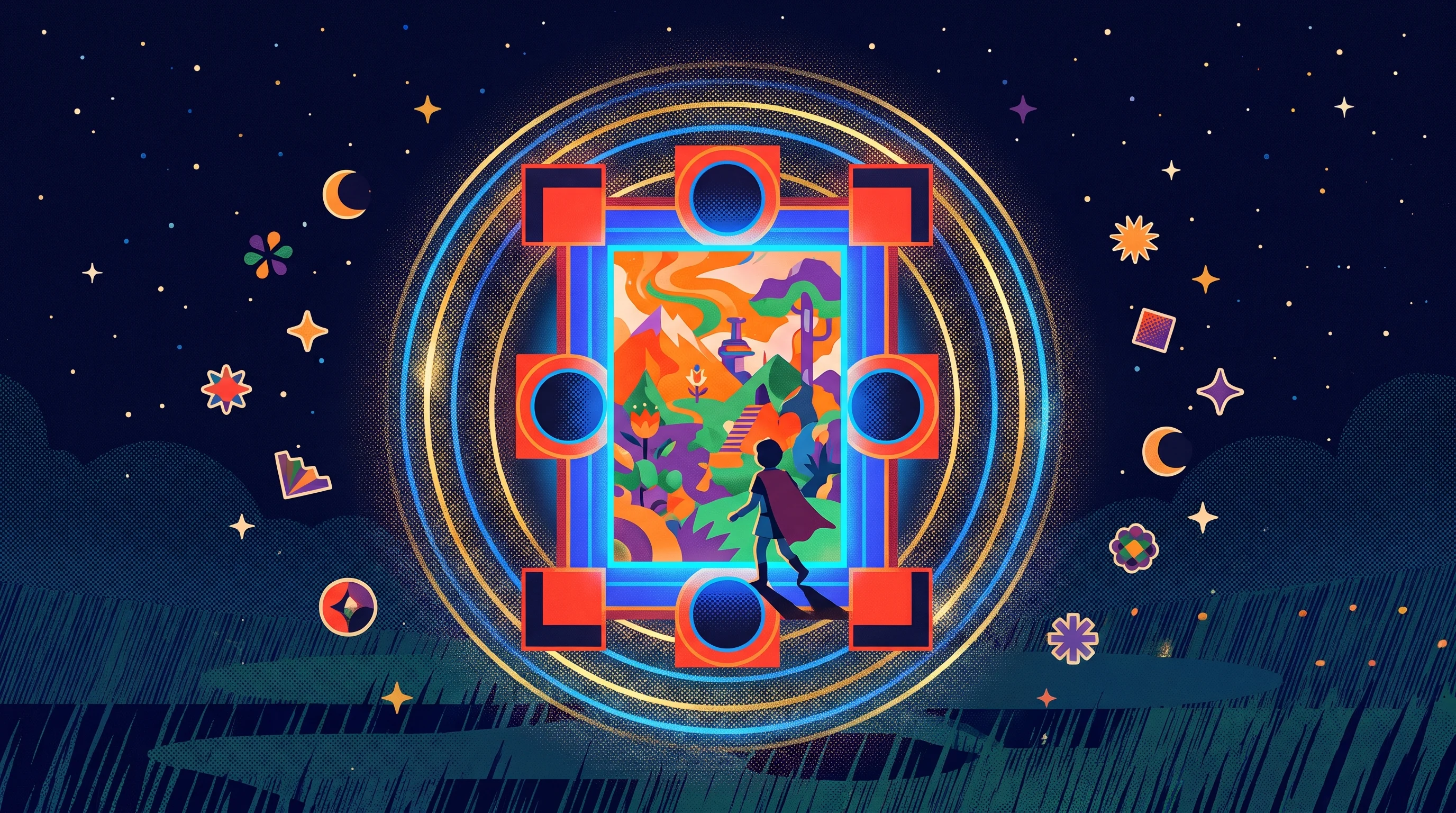
If you have been watching anime for more than a year, you have almost certainly watched at least one isekai without necessarily knowing that is what it was called. Here is everything you need to know.
What does isekai mean?
The word isekai (異世界) is Japanese and translates literally as “different world” or “another world.” As a genre term it refers to stories in which a character is transported from their ordinary world into a different one – usually a fantasy world, often one that resembles a video game.
How does the transport usually happen?
The genre is remarkably creative about this:
- Truck: A character is hit by a truck and either dies and reincarnates, or wakes up in another world. Jokingly called “truck-kun” by fans.
- Death and reincarnation: Character dies by any means and is reborn in a fantasy world, sometimes with memories of their previous life.
- Summoned: A character is called to another world by magic, usually to fulfil a prophecy.
- Falling into a game: Character enters a video game world, either physically or digitally.
- Waking up: Character simply wakes up in another world with no explanation given.
Where did the genre come from?
Isekai as a recognisable genre label became widely used in the 2010s, but the concept is much older. Alice in Wonderland (1865) is an isekai. The Wizard of Oz (1900) is an isekai. In anime specifically, Inuyasha (2000) is an isekai. The Vision of Escaflowne (1996) is an isekai.
The modern boom in isekai light novels and their anime adaptations started roughly around 2012-2014, accelerated by the success of Sword Art Online and later Re:Zero and That Time I Got Reincarnated as a Slime.
A few starting points by sub-type
| Sub-type | Good starting point |
|---|---|
| Classic portal fantasy | The Twelve Kingdoms |
| Game-mechanics isekai | Overlord |
| Cozy/slice-of-life isekai | Mushoku Tensei, Spice and Wolf (loosely) |
| Satirical isekai | KonoSuba |
| Literary isekai | Made in Abyss (more complex than typical) |
| Isekai done very differently | Re:Zero |
Is it a good genre?
It is a large genre with the same distribution of quality as any other. There are exceptional isekai and there are very bad ones. The best ones use the “transported to another world” premise to explore themes that would be harder to reach with a purely contemporary setting – identity, purpose, the value of a second chance.